Buy sentify.eu ?
We are moving the project
sentify.eu .
Are you interested in purchasing the domain
sentify.eu ?
domain@kv-gmbh.de · 0541-91531010
Buy sentify.eu ?
What is the meaning of "ought to"?
"Ought to" is a modal verb that is used to express obligation, duty, or moral correctness. It indicates that something is the right thing to do, or that it is necessary or advisable. It is often used to give advice or make recommendations. For example, "You ought to apologize for your mistake" suggests that it is the right or moral thing to do. **
Is the statement "I think, therefore I am" a being-ought fallacy?
The statement "I think, therefore I am" is not a being-ought fallacy. It is a philosophical proposition put forth by René Descartes, which asserts the existence of the self as a thinking being. It does not make any normative claims about what one ought to do or be, but rather focuses on the epistemological certainty of one's own existence as a thinking being. Therefore, it does not fall into the category of being-ought fallacy, which involves deriving an "ought" statement from a statement about being. **

Similar search terms for Ought
Top-Angebote
Products related to Ought:
-
Uplifted Finds 2025 Nursing Health Smart Watch ECG & Uric Acid Body Analysis Executive Blood Lipid & BP Monitoring Suite black"Inaugurate a powerful ""VitalitySanctuary"" energy in your environment with our most advanced 2025 physiological monitoring solution. This premium Nursing Health Smartwatch is the ultimate designer choice for creating a ""PrecisionModern"" or..."238,97 $*Shipping: 0,00 $Secure redirect to the provider
-
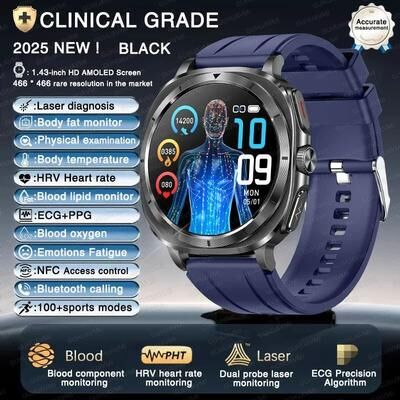
Uplifted Finds 2025 Nursing Health Smart Watch ECG & Uric Acid Body Analysis Executive Blood Lipid & BP Monitoring Suite blue"Inaugurate a powerful ""VitalitySanctuary"" energy in your environment with our most advanced 2025 physiological monitoring solution. This premium Nursing Health Smartwatch is the ultimate designer choice for creating a ""PrecisionModern"" or..."238,97 $*Shipping: 0,00 $Secure redirect to the provider
-
Uplifted Finds 2025 Nursing Health Smart Watch ECG & Uric Acid Body Analysis Executive Blood Lipid & BP Monitoring Suite brown Leather"Inaugurate a powerful ""VitalitySanctuary"" energy in your environment with our most advanced 2025 physiological monitoring solution. This premium Nursing Health Smartwatch is the ultimate designer choice for creating a ""PrecisionModern"" or..."248,97 $*Shipping: 0,00 $Secure redirect to the provider



-
When do you use "ought to" and "should" and when do you not?
"Ought to" and "should" are both used to express obligation, duty, or moral correctness. They are often used interchangeably, but "ought to" is considered slightly stronger and more formal than "should." Both are used to give advice or make recommendations. However, they are not used in the negative form, as the negative form of "ought to" is "ought not to" and the negative form of "should" is "should not." Instead, "shouldn't" is used to express the negative form of "should." **
-
What exactly does the phrase "moral ought" mean within the scope of our abilities?
The phrase "moral ought" refers to the idea that there are certain actions or behaviors that we have a moral obligation or duty to perform. It implies that there is a moral standard or principle that guides our actions and decisions. When we say we "ought" to do something morally, it suggests that it is the right thing to do based on ethical considerations and principles. Ultimately, the concept of "moral ought" highlights the importance of acting in accordance with moral values and principles, even when it may be challenging or inconvenient. **
-
Is the statement "I think, therefore I am" a fallacy of the "is-ought" distinction?
The statement "I think, therefore I am" is not a fallacy of the "is-ought" distinction. The "is-ought" distinction refers to the idea that one cannot derive an "ought" (a moral or prescriptive statement) from an "is" (a descriptive statement). However, "I think, therefore I am" is a statement about existence and self-awareness, not a prescription for how one should behave. Therefore, it does not fall into the category of the "is-ought" fallacy. **
-
Is there a naturalistic fallacy when one infers from what ought to be to what is?
Yes, there is a naturalistic fallacy when one infers from what ought to be to what is. This fallacy occurs when someone assumes that just because something is a certain way, it ought to be that way. In other words, it is a mistake to derive moral or factual conclusions from natural or descriptive premises. It is important to recognize the distinction between what is and what ought to be in order to avoid this fallacy. **


What are insights?
Insights are deep understandings or perceptions gained through the analysis of information or data. They provide valuable knowledge or understanding that can lead to new perspectives, ideas, or solutions. Insights often result from connecting dots, identifying patterns, or uncovering hidden relationships within the information. They can help individuals or organizations make informed decisions, solve problems, or improve processes. **
Is anti-Christian sentiment racism?
No, anti-Christian sentiment is not considered racism because Christianity is a religion, not a race. Racism is the discrimination or prejudice against individuals based on their race or ethnicity, whereas anti-Christian sentiment is directed towards individuals based on their religious beliefs. While both racism and anti-Christian sentiment involve discrimination and prejudice, they are distinct concepts with different targets. **
Top-Angebote
Products related to Ought:
-
Educational Insights Boxineers Cardboard Vehicles Craft Kit - 84 Pieces for Kids - Educational InsightsTransform an ordinary cardboard box into a unique vehicle with the Boxineers Cardboard Vehicles Craft Kit. This kit includes 84 pieces, allowing children to create monster trucks, airplanes, rocket ships, recycling trucks, and many other imaginative creations. The reusable construction set features a child-friendly screwdriver and hole punch, making it easy for kids to attach the supplied parts without cutting the cardboard. Add wheels, wings, steering wheels, control panels, windows, flames, and other colorful accessories to customize each vehicle. The kit contains 30 bolts, six brackets, 40 reusable vehicle accessories, and six sticker sheets. Boxineers combines hands-on making with open-ended pretend play, encouraging children to experiment with how parts connect and solve simple construction problems.17,39 £*Shipping: 3,95 £Secure redirect to the provider
-
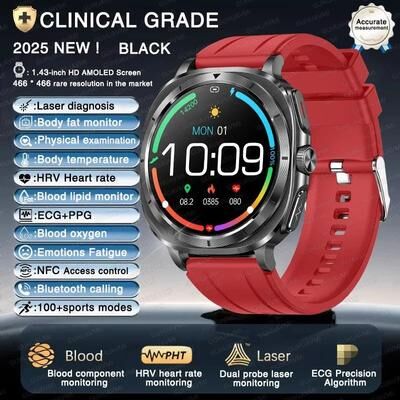
Uplifted Finds 2025 Nursing Health Smart Watch ECG & Uric Acid Body Analysis Executive Blood Lipid & BP Monitoring Suite red"Inaugurate a powerful ""VitalitySanctuary"" energy in your environment with our most advanced 2025 physiological monitoring solution. This premium Nursing Health Smartwatch is the ultimate designer choice for creating a ""PrecisionModern"" or..."238,97 $*Shipping: 0,00 $Secure redirect to the provider
-
Uplifted Finds 2025 Nursing Health Smart Watch ECG & Uric Acid Body Analysis Executive Blood Lipid & BP Monitoring Suite black"Inaugurate a powerful ""VitalitySanctuary"" energy in your environment with our most advanced 2025 physiological monitoring solution. This premium Nursing Health Smartwatch is the ultimate designer choice for creating a ""PrecisionModern"" or..."238,97 $*Shipping: 0,00 $Secure redirect to the provider
-
What is the meaning of "ought to"?
"Ought to" is a modal verb that is used to express obligation, duty, or moral correctness. It indicates that something is the right thing to do, or that it is necessary or advisable. It is often used to give advice or make recommendations. For example, "You ought to apologize for your mistake" suggests that it is the right or moral thing to do. **
-
Is the statement "I think, therefore I am" a being-ought fallacy?
The statement "I think, therefore I am" is not a being-ought fallacy. It is a philosophical proposition put forth by René Descartes, which asserts the existence of the self as a thinking being. It does not make any normative claims about what one ought to do or be, but rather focuses on the epistemological certainty of one's own existence as a thinking being. Therefore, it does not fall into the category of being-ought fallacy, which involves deriving an "ought" statement from a statement about being. **
-
When do you use "ought to" and "should" and when do you not?
"Ought to" and "should" are both used to express obligation, duty, or moral correctness. They are often used interchangeably, but "ought to" is considered slightly stronger and more formal than "should." Both are used to give advice or make recommendations. However, they are not used in the negative form, as the negative form of "ought to" is "ought not to" and the negative form of "should" is "should not." Instead, "shouldn't" is used to express the negative form of "should." **
-
What exactly does the phrase "moral ought" mean within the scope of our abilities?
The phrase "moral ought" refers to the idea that there are certain actions or behaviors that we have a moral obligation or duty to perform. It implies that there is a moral standard or principle that guides our actions and decisions. When we say we "ought" to do something morally, it suggests that it is the right thing to do based on ethical considerations and principles. Ultimately, the concept of "moral ought" highlights the importance of acting in accordance with moral values and principles, even when it may be challenging or inconvenient. **
Similar search terms for Ought
-
Uplifted Finds 2025 Nursing Health Smart Watch ECG & Uric Acid Body Analysis Executive Blood Lipid & BP Monitoring Suite blue"Inaugurate a powerful ""VitalitySanctuary"" energy in your environment with our most advanced 2025 physiological monitoring solution. This premium Nursing Health Smartwatch is the ultimate designer choice for creating a ""PrecisionModern"" or..."238,97 $*Shipping: 0,00 $Secure redirect to the provider
-
Uplifted Finds 2025 Nursing Health Smart Watch ECG & Uric Acid Body Analysis Executive Blood Lipid & BP Monitoring Suite brown Leather"Inaugurate a powerful ""VitalitySanctuary"" energy in your environment with our most advanced 2025 physiological monitoring solution. This premium Nursing Health Smartwatch is the ultimate designer choice for creating a ""PrecisionModern"" or..."248,97 $*Shipping: 0,00 $Secure redirect to the provider
-
Uplifted Finds 2025 Nursing Health Smart Watch ECG & Uric Acid Body Analysis Executive Blood Lipid & BP Monitoring Suite black Leather"Inaugurate a powerful ""VitalitySanctuary"" energy in your environment with our most advanced 2025 physiological monitoring solution. This premium Nursing Health Smartwatch is the ultimate designer choice for creating a ""PrecisionModern"" or..."248,97 $*Shipping: 0,00 $Secure redirect to the provider
-
Uplifted Finds 2025 Nursing Health Smart Watch ECG & Uric Acid Body Analysis Executive Blood Lipid & BP Monitoring Suite black Steel 2a"Inaugurate a powerful ""VitalitySanctuary"" energy in your environment with our most advanced 2025 physiological monitoring solution. This premium Nursing Health Smartwatch is the ultimate designer choice for creating a ""PrecisionModern"" or..."263,97 $*Shipping: 0,00 $Secure redirect to the provider
-
Is the statement "I think, therefore I am" a fallacy of the "is-ought" distinction?
The statement "I think, therefore I am" is not a fallacy of the "is-ought" distinction. The "is-ought" distinction refers to the idea that one cannot derive an "ought" (a moral or prescriptive statement) from an "is" (a descriptive statement). However, "I think, therefore I am" is a statement about existence and self-awareness, not a prescription for how one should behave. Therefore, it does not fall into the category of the "is-ought" fallacy. **
-
Is there a naturalistic fallacy when one infers from what ought to be to what is?
Yes, there is a naturalistic fallacy when one infers from what ought to be to what is. This fallacy occurs when someone assumes that just because something is a certain way, it ought to be that way. In other words, it is a mistake to derive moral or factual conclusions from natural or descriptive premises. It is important to recognize the distinction between what is and what ought to be in order to avoid this fallacy. **
-
What are insights?
Insights are deep understandings or perceptions gained through the analysis of information or data. They provide valuable knowledge or understanding that can lead to new perspectives, ideas, or solutions. Insights often result from connecting dots, identifying patterns, or uncovering hidden relationships within the information. They can help individuals or organizations make informed decisions, solve problems, or improve processes. **
-
Is anti-Christian sentiment racism?
No, anti-Christian sentiment is not considered racism because Christianity is a religion, not a race. Racism is the discrimination or prejudice against individuals based on their race or ethnicity, whereas anti-Christian sentiment is directed towards individuals based on their religious beliefs. While both racism and anti-Christian sentiment involve discrimination and prejudice, they are distinct concepts with different targets. **
* All prices are inclusive of VAT and, if applicable, plus shipping costs. The offer information is based on the details provided by the respective shop and is updated through automated processes. Real-time updates do not occur, so deviations can occur in individual cases. ** Note: Parts of this content were created by AI.